 |
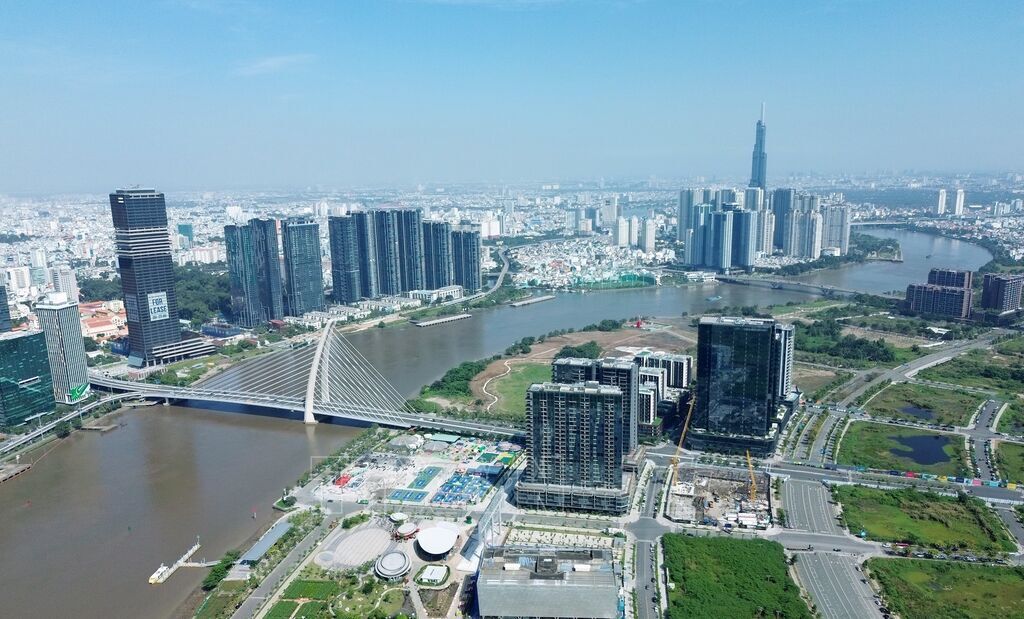
| A bird’s eye view of Ho Chi Minh City __ Photo: VNA |
Urban Development Law creates new development space, improves urban governance
Effective as of October 1, the Urban Development Law establishes a new legal framework aimed at creating greater development space, attracting high-quality investment and improving urban governance, particularly in Ho Chi Minh City, other special-class cities and special economic zones.
With five chapters and 66 articles, the law introduces seven groups of special and preferential policies aimed at promoting the development of special-class urban areas.
Accordingly, Ho Chi Minh City and other cities classified as special-class urban areas will be able to apply the mechanisms and policies provided under the law, while Hanoi will continue to be governed by the Capital Law. Other cities may apply certain mechanisms within the scope prescribed by law, depending on their development priorities, local conditions and implementation capacity.
A notable feature of the law is its broader approach to urban development. Urban areas are viewed not simply as spaces for housing, transport and technical infrastructure, but as places capable of generating economic, cultural and social values and enhancing the urban experience.
One notable provision concerns transit-oriented development (TOD). Under Article 13, municipal People’s Councils may formulate policies for TOD areas, including the use of municipal budgets to implement independent public investment projects involving compensation, support and resettlement. Such projects may be carried out to recover land, undertake urban redevelopment, provide resettlement and create land reserves. Land areas made available through these projects may subsequently be put for auction of land use rights for urban development, commercial and service projects in accordance with law. They may also be used to make payments to investors implementing railway projects under build-transfer contracts in accordance with the law on public-private partnership investment.
The law also devotes Section 4 of Chapter II exclusively to the development of culture, sports, tourism, education, training, healthcare and social welfare.
As stated in Article 26, municipal People’s Councils may adopt mechanisms and policies to mobilise private and other non-State resources and use public assets and municipal budgets to support the protection and development of culture, sports and tourism. They may also provide support to organisations and individuals involved in restoring and protecting areas of cultural and historical significance and valuable architectural works.
Additionally, the law provides the preservation and promotion of the cultural identities of ethnic minority communities.
This represents a notable shift in approach, as resources for culture and heritage are no longer considered solely in terms of conservation but may be mobilised from society under appropriate urban development mechanisms.
The law also allows cities to introduce mechanisms and policies for the night-time economy; commercial, cultural and sports development zones; cultural and creative centres and complexes; and other cultural and sports facilities.
Pilot scheme for public lawyers launched from October 1
National Assembly Resolution 24/2026/QH16 on the pilot implementation of the public lawyer scheme takes effect on October 1, with the pilot running through September 30, 2028.
Under the resolution, a public lawyer is an official, civil servant, public employee, officer of the Vietnam People’s Army or People’s Public Security forces, or an employee of a state enterprise who meets the law-specified requirements and is issued a lawyer practising certificate to perform legal affairs in accordance with regulations.
Public lawyers are tasked with protecting the lawful rights and interests of state agencies, agencies and organisations within the political system, and state enterprises.
The pilot scheme will be implemented at eight ministries: Ministry of National Defence, Ministry of Public Security, Ministry of Foreign Affairs, Ministry of Justice, Ministry of Finance, Ministry of Industry and Trade, Ministry of Agriculture and Environment, and Ministry of Construction.
At the local level, the scheme will be piloted by the People’s Committees of 10 provinces and cities, including Hanoi, Ho Chi Minh City, Da Nang, Hai Phong, Can Tho, Dong Nai, Bac Ninh, Quang Ninh, Khanh Hoa and Lam Dong.
To guide implementation of the resolution, the Government issued Decree 364/2026/ND-CP on September 21, which also takes effect on October 1.
New rules on vessel control at port border gates
Government Decree 289/2026/ND-CP dated July 21, on the management and maintenance of security and order at port border gates under the management of the Ministry of Public Security also takes effect on October 1.
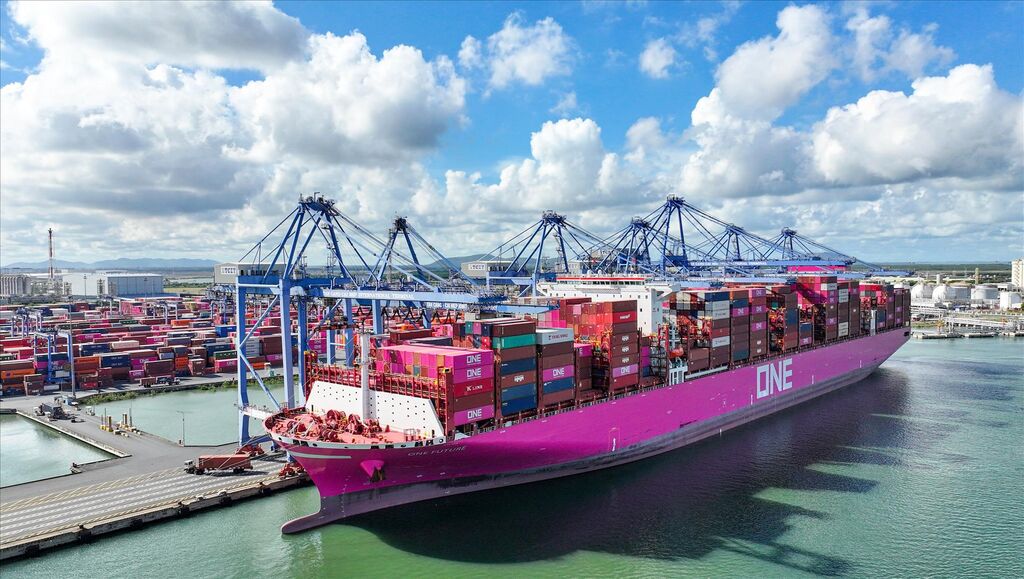 |
| Tan Cang–Cai Mep International Terminal in Ho Chi Minh City __ Photo: VNA |
The decree regulates control procedures; inspection and supervision; the issuance of shore passes to crew members and permits for boarding vessels; and the management of activities related to security and order involving people, vessels and other means of transport operating at port border gates.
Under the decree, arriving vessels, together with their crew members and passengers, must complete entry procedures at the first port border gate they call at after entering Vietnam’s maritime border area. Meanwhile, departing vessels must complete exit procedures at the final port border gate before leaving Vietnam’s territorial waters or maritime national border, as prescribed by law.
Vessels in transit must complete transit procedures upon entering Vietnam’s maritime border area. During transit, the vessel master is responsible for managing crew members, passengers and cargo on board, as well as ensuring the integrity of seals and immigration documents. Anyone leaving or boarding the vessel, or any other vessel or craft coming alongside, must comply with relevant regulations and obtain permission from competent authorities, except in certain cases involving the performance of assigned duties.
Vessels moving between Vietnamese port border gates must complete departure transfer procedures before leaving the port of departure and complete arrival transfer procedures upon reaching the port of arrival.
VNeID accounts can be used to access the Vietnam National Single Window
Government Decree 336/2026/ND-CP on administrative procedures for goods and means of transport entering, leaving or transiting Vietnam under the National Single Window and ASEAN Single Window mechanisms will take effect on October 15.
The decree regulates administrative procedures under the National Single Window and ASEAN Single Window mechanisms, as well as the management, operation, exchange and sharing of data through the Vietnam National Single Window.
Notably, from October 15, users will be able to use electronic identification accounts issued through the VNeID app to register for and access the Vietnam National Single Window. Alternatively, users may continue to register an account and digital signature on the Vietnam National Single Window in accordance with regulations.
The unit responsible for managing the window must verify and cross-check information provided by declarants within one working day of receiving it. If the information is incomplete or inaccurate, the unit will notify the declarant by email for him to make amendments or provide additional information. If an application is rejected, the declarant will also be notified of the reason. If the information is complete and accurate, the declarant will receive an approval notice by email.- (VLLF)