 |
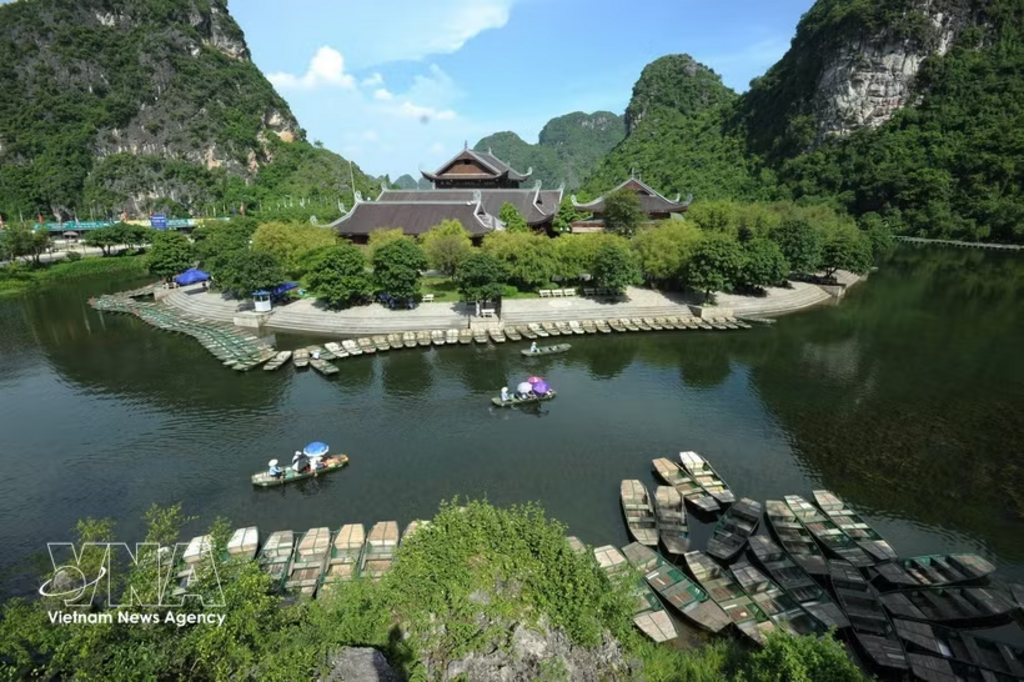
| A boat pier at the Trang An Scenic Landscape Complex in Ninh Binh province__Photo: VNA |
General Secretary of the Communist Party of Vietnam Central Committee and President To Lam recently signed and issued Resolution 26-NQ/TW to develop Vietnam’s tourism industry into a spearhead economic sector in the new era.
Five guiding principles
The resolution is seen as an important milestone, opening up new orientations and development opportunities for Vietnam’s tourism sector.
Accordingly, the Politburo set five guiding viewpoints that must be thoroughly understood and adopted decisively, comprehensively and effectively.
First, tourism development must truly turn the sector into an economic spearhead and a new growth driver, contributing to the goal of achieving double-digit economic growth.
Culture is identified as the core foundation while national identity and visitor experience quality are competitive advantages. Tourism development will be driven by sci-tech application, innovation and digital transformation.
Tourism should be built as an integrated economic ecosystem, generating momentum for trade, services, transport, cultural and creative industries, agriculture, digital economy, night-time economy and other sectors.
These linkages are designed to raise added value, ensure sustainable development across economic, cultural, social and environmental pillars, and support national defence – security, social safety and order, cultural diplomacy and international integration.
Another orientation is to restructure the industry away from a quantity-driven growth model toward quality, smart development, green growth and innovation.
The focus will be on improving product, service and experience quality and competitiveness, upgrading workforce skills and addressing labour, employment and social welfare issues.
The resolution calls for modernising tourism governance, promoting digital technology and data-driven management, linking these with spatial planning, expanding creative spaces, and preserving and bringing into play the values of cultural heritage and fine traditions.
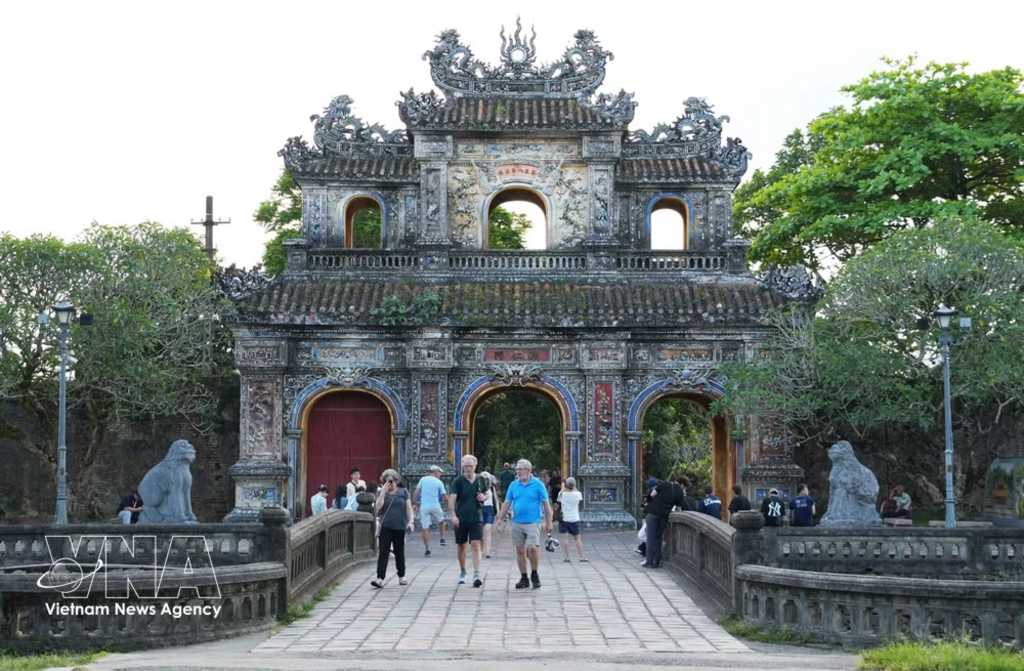 |
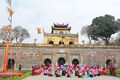
| Tourists visit a relic site in the Complex of Hue Monuments in Hue city__Photo: VNA |
Tourism development is identified as a task for the entire political system under the Party leadership and State management, with enterprises as pioneers and citizens as both participants and beneficiaries.
The resolution also urges stronger inter-sectoral and inter-regional coordination, an equal and favourable business climate; and efficient mobilisation, allocation and use of domestic and global resources.
Major targets for 2030
By 2030, Vietnam aims to make tourism a true spearhead sector, directly contributing 10–12% of GDP and maintaining a leading position in Southeast Asia in scale and growth.
The country targets 45–50 million foreign visitors and 160 million domestic tourists, focusing on high-spending and longer-stay markets, with total tourism revenue of 80–90 billion USD.
It will develop three tourism growth poles, including Hanoi, Ho Chi Minh City and Da Nang, along with 10 key tourism hubs, 20 national tourism zones and 15 globally competitive branded tourism enterprises.
By 2030, the sector aims to provide about 1.5 million lodging rooms and generate 2.3 million direct and 3.5 million indirect jobs.
Another target is a comprehensive smart tourism ecosystem, a national tourism database and a national digital tourism platform.
Vision to 2045
By 2045, Vietnam envisions a modern and sustainable tourism sector that continues to serve as an important economic driver.
The industry aims to contribute 14–15% directly to GDP, place Vietnam among the world’s top 30 in tourism competitiveness and attract 70 million foreign visitors.- (VNA/VLLF)