Vu Van Anh
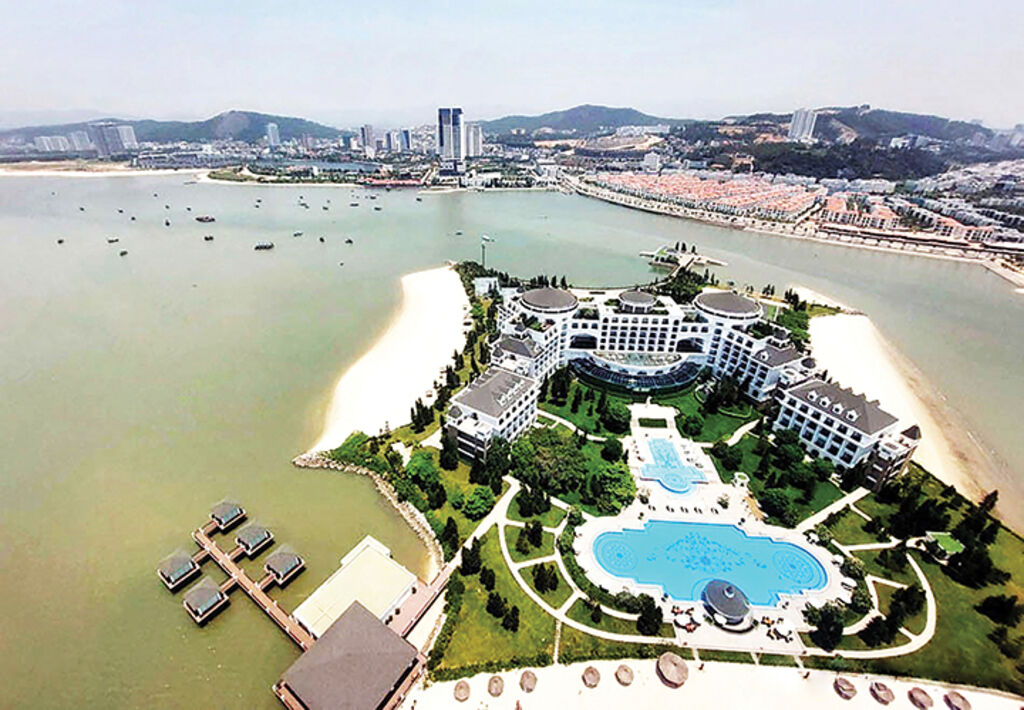 |
| Reu Island, a luxury resort destination offering a wide range of attractions and services in Ha Long Bay, Quang Ninh city__Photo: Thanh Van/VNA |
In 2018, the 8th plenum of the 12th Party Central Committee adopted Resolution 36-NQ/TW on the Strategy for sustainable development of Vietnam’s marine economy through 2030, with a vision towards 2045. However, the implementation of the resolution has revealed issues, requiring a new strategic approach. In this context, the 14th Party Central Committee on July 28, 2026, issued Resolution 20-NQ/TW on building and developing Vietnam into a strong maritime nation, placing economy, governance, science-technology, culture-society, national defence-security and foreign affairs within a unified whole. This article analyses the breakthroughs of Resolution 20 compared to Resolution 36, focusing on the shift from sustainable marine economic development to integrated marine governance.
Introduction
As a country with a vast marine space, situated on an important international shipping lane, Vietnam regards the sea as a living space and a driver of economic development that holds special significance for national defence, security and external relations. The transition from Resolution 36 to Resolution 20 represents continuity and a significant advancement in Vietnam’s maritime strategic thinking.
Speaking at the Vietnam Maritime Forum 2026 held on October 2, 2026, in Hanoi, with the theme “International Cooperation and Integration in Building Vietnam into a Strong Maritime Nation”, Vice President of the National Assembly Nguyen Doan Anh stated that Resolution 20 marks a shift from a mindset of mere resource exploitation to modern marine governance, development of a blue marine economy, and unified management of the national marine space.
“The sea is an important foundation of the nation’s aggregate strength. Building and developing Vietnam into a strong maritime nation is a long-term national development strategy”, he said.
Breakthroughs of the new resolution
The most important change brought about by Resolution 20 is a progress in the strategic vision: from sustainable development of the marine economy to building and developing Vietnam into a strong maritime nation, as reflected in the general objectives to be achieved by 2030.
Previously, Resolution 36 focused on sustainable development of the marine economy, aiming to build a strong maritime nation. Resolution 20 adopts a new strategic vision, namely building a solid foundation for Vietnam to become a strong maritime nation with a modern and unified marine governance system based on science, technology and digital data; efficient and sustainable exploitation and utilisation of marine resources and space; and protection of the environment and ecosystems, and safeguarding of national defence, security and maritime sovereignty. This is a strategic change: the sea is no longer viewed primarily as a space for economic development but as a survival space, a strategic development space, and a component of the national aggregate strength.
Another change is the shift from sector-based marine management to integrated and unified governance of the national marine space. This can be regarded as one of the most important changes in implementation approaches.
Resolution 36 addressed the integrated management of marine resources and environment, while Resolution 20 goes further by requiring synchronous governance of sea areas, seabed, subsoil, islands, coastal areas, and the airspace above the sea, whilst establishing an inter-sectoral coordination mechanism with clearly defined functions, competence and responsibilities. This mechanism will facilitate the efficient use of a sea area for multiple purposes (maritime, fishery, oil and gas production, wind power generation, nature conservation, national defence, and tourism) under different sectors’ master plans without causing contradictions and conflicts.
The new resolution considers the improvement of institutions and marine spatial planning as a specific breakthrough. It requires the completion of mechanisms for allocation, lease, auction, registration and exploitation of marine space, together with clarifying the rights and obligations of stakeholders. This marks a step forward from the mindset of “resource management” to a mindset that treats marine space as a development resource that needs to be allocated and utilised efficiently.
In addition, the role of science, technology, data, and digital transformation is elevated to a new level. While Resolution 36 identified science and technology and high-quality human resources as breakthrough factors, Resolution 20 sets the requirement to “master” marine knowledge, data and technology, specifically mentioning the development of the national marine database, digital maps of seas and oceans, dual-use deep-sea research vessels, artificial intelligence, big data, remote sensing, Internet of Things, and smart marine monitoring systems.
Resolution 20 also provides the specific identification of new marine growth drivers. In furtherance of Resolution 36 that already mentioned renewable energy and new marine economic sectors, the new resolution identifies more specifically such areas as offshore wind power and solar power, green hydrogen and ammonia, marine biotechnology, medicine and pharmacy, seawater desalination, wave power, and hi-tech mariculture. At the same time, marine economic sectors are required to transform towards a green, digital, smart and circular model.
Furthermore, the new resolution places enterprises and mobilisation of social resources in a clearer position within the marine strategy. It not only urges the development of major marine enterprises but also requires the formulation of a mechanism for the State to place orders for domestic enterprises’ performance of key tasks, promote green finance, share the State-enterprise risks, and form linkages with multinational corporations to participate more deeply in global oceanic value chains.
Finally, the new resolution converts many orientational objectives into specific measurable targets to be achieved by 2030. This quantification will make it easier to evaluate implementation results of the resolution.
Regarding marine economy and infrastructure: The total GRDP of the coastal provinces and cities will contribute over 70 per cent of the whole country’s GDP; GRDP of the coastal localities will increase by over 11 per cent per annum; average per capita income of these localities will be 1.2-1.3 times higher than the national average. Five or six strong marine economic centres and three special economic zones will be formed along the coast.
Regarding science, environment and social affairs: Two or three leading marine research institutions in ASEAN will be built, with one or two deep-sea research vessels. The national marine database will be completed for digitisation of all state management data. The area of marine and coastal protected areas will account for at least 6 per cent of the country’s total natural sea area. Coastal residents will be guaranted access to electricity, clean water, Internet services, health care and education. The national sovereignty and security and safety for activities and structures at sea will be firmly safeguarded.
Vision towards 2045
Vietnam will become a strong maritime nation, prosperous and sustainably developed from the sea; with modern governance, and advanced marine science and technology. The living standards for coastal and island residents will be improved; maritime sovereignty, defence and security firmly maintained, with an increasingly enhanced position of Vietnam in global ocean governance.
From an international perspective, Pauline Tamesis, United Nations Resident Coordinator in Vietnam, appreciated the objectives set out in Resolution 20, stating that they are fully consistent with the commitments of the Third United Nations Ocean Conference. She proposed four priority action groups, including: expanding marine protected areas to at least 6 per cent of the country’s total sea area by 2030, decarbonising maritime transport, combating pollution, and diversifying green financial sources to support fishermen and coastal residents.
From strategic vision to practical action
To build Vietnam into a strong maritime nation, Resolution 20 sets out specific tasks and solutions, including strengthening the leadership of the Party, identifying the sea as a strategic development space and a new development driver, intensifying public communication and external information to improve the public awareness about the role of the sea and islands.
The resolution also requires renovating marine governance based on digital data and marine spatial planning, building the capacity to forecast and manage maritime risks, expanding the development space to high and deep seas, and bringing into full play the role of enterprises, socio-political organisations and citizens in implementation of marine policies.
Regulatory authorities will urgently complete the legal system on seas and islands, remove statutory bottlenecks, and create a favourable environment for resource mobilisation. It is also required to improve mechanisms for assigning, leasing, auctioning and exploiting marine space, provide specific incentives for key and new marine economic sectors, and revise the master plan on the national marine space for 2021-30, with a vision towards 2050.
It will be necessary to diversify investment capital sources, promote green finance, scientific research, innovation, and development of high-quality human resources; and develop a green, modern and smart marine economy that efficiently utilises natural resources and energy. The maritime economic sector will be developed into an important pillar, building a system of green, smart and modern seaports and international transhipment centres.
At the same time, the fisheries sector will be restructured towards sustainability, reducing onshore fishing, development offshore fishing and hi-tech mariculture. It is proposed to develop marine tourism with diverse biological, wellness and community tour products and services; prioritise the synchronous development of transport, energy and digital infrastructure; and strengthen environmental protection and restoration of aquatic resources, coastal forests, coral reefs and marine ecosystems.
Another requirement is to resolutely combat illegal, unreported and unregulated fishing, and proactively integrate and expand international cooperation on the basis of international law, including the 1982 United Nations Convention on the Law of the Sea (UNCLOS), the Declaration on the Conduct of Parties in the South China Sea (DOC), and the Code of Conduct in the South China Sea (COC).
From the aforementioned tasks and solutions, it can be seen that the objectives set by the resolution are well-founded in terms of potential, orientation and policy foundation. However, the feasibility of the resolution will primarily depend on the factors below.
The first factor is the ability to swiftly institutionalise the guidelines provided by the resolution, particularly those regarding spatial planning and maritime spatial use rights, offshore wind power, infrastructure investment, marine data, and new marine economic sectors.
The second is coordination and implementation capacity. If individual sectors and localities continue to manage parts of the marine space in their own separate ways, it will be very hard to achieve the goal of integrated governance. Therefore, the resolution’s requirement for a unified inter-sectoral coordination mechanism is decisive.
The third factor is the capacity to mobilise off-budget resources and master technology. International transhipment seaports, offshore wind power, deep-sea research vessels, digital infrastructure, and the marine industry all require massive capital amounts and technological expertise. It is difficult for the State to independently provide entire funds. For that reason, the role of the private sector, state enterprises, foreign investment, and public-private cooperation mechanisms is exceptionally important.
At the Vietnam Maritime Forum 2026, Tran Trung Tinh, Deputy Minister of Science and Technology, proposed four directions for international cooperation to enhance Vietnam’s marine science and technology capacity: developing marine research institutions; mastering advanced technologies; connecting ocean data; and attracting international experts.
In conclusion, Resolution 20 marks a new development in Vietnam’s maritime strategic thinking. The overarching change does not lie in individual tasks, as many matters such as green economy, science and technology, integrated management, and renewable energy were mentioned in Resolution 36. More importantly, the renovation lies in how all these issues are rearranged within a higher strategic mindset: shifting from developing marine economy to building a strong maritime nation; from practicing resource exploitation to marine space governance; and from applying science and technology to gradually mastering marine knowledge, data and technology.-