 |
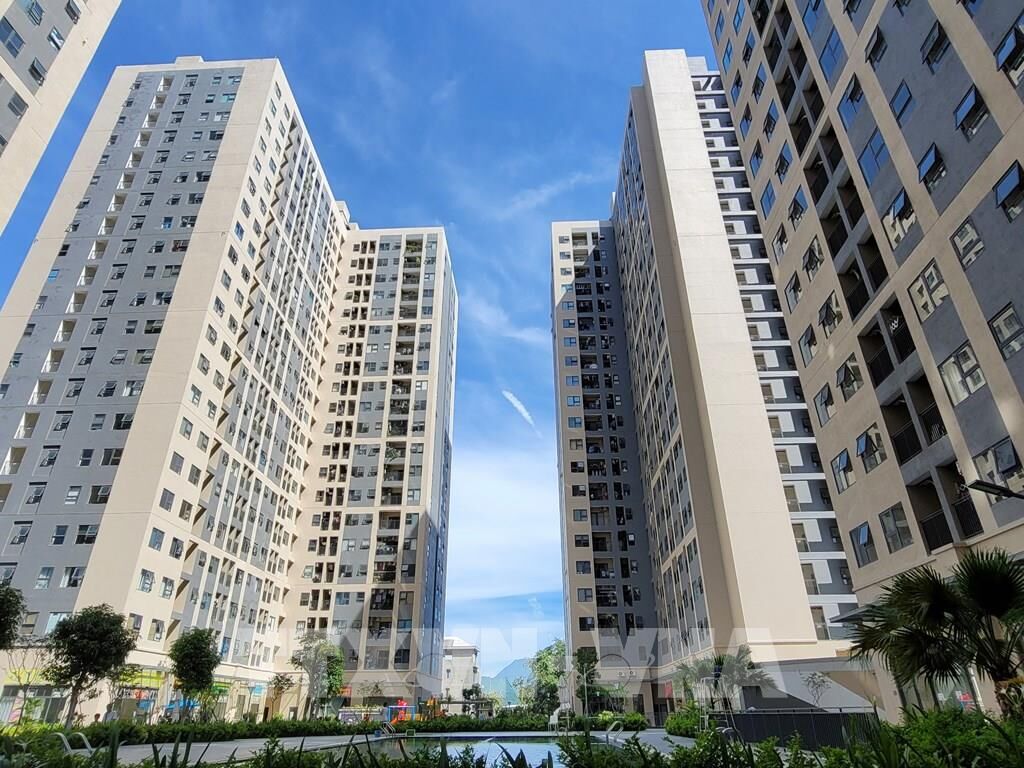
| Rental and affordable commercial housing is brought into the draft Housing Law__Photo: VNA |
The Ministry of Construction (MOC) is seeking public feedback on two draft laws revising the Housing Law and the Real Estate Business Law, which contain new proposals on rental and affordable commercial housing and the digitalisation of real estate data.
Establishing mechanisms for rental and affordable commercial housing
For the first time, the draft revised Housing Law contains separate provisions governing the development of rental housing and affordable commercial housing.
The proposal comes amid a persistent shortage of homes affordable to most people, while housing supply in major cities remains dominated by mid-range and high-end developments. Demand for rental accommodation is also rising, driven by rapid urbanisation and greater labour mobility.
Under the draft, rental housing is defined as housing developed by organisations or individuals for lease. The State would take the leading role in establishing the housing stock using the state budget and the National Housing Funds.
Priority tenants would include groups eligible for social housing policies, such as low-income earners, workers, members of the armed forces, cadres, civil servants, public employees and students. Other workers in need of accommodation could also access such housing if they meet the conditions prescribed by law.
In light of the proposed new policy, the MOC proposes allowing investors to use up to 20 per cent of a project’s total floor area for commercial and service purposes, helping them generate additional revenue and reduce rental prices. Rental income would also qualify for value-added tax incentives.
Dr Nguyen Van Dinh, Chairman of the Vietnam Association of Real Estate Brokers and Vice Chairman of the Vietnam National Real Estate Association, said developing long-term rental housing was essential, but the state budget and National Housing Funds alone would be insufficient to meet substantial market demand.
To expand the rental housing stock, he called for incentives relating to land, taxation, credit and interest rates to encourage sole proprietorships, investment funds, financial institutions and professional operators to participate in the market.
Affordable commercial housing would also be regulated by law for the first time. The segment is intended to bridge the gap between social housing and conventional commercial housing, targeting middle-income earners who have difficulty accessing suitable homes.
Under the draft, provincial-level People’s Committees would determine sale and lease-purchase prices for different areas. Prices would have to remain affordable for residents while fully reflecting investment costs.
To curb speculation, buyers and lease-purchasers would not be permitted to transfer their homes for at least five years after completing payment. Each person would also be allowed to own only one home in the same project.
Improving market transparency through data
The draft revised Real Estate Business Law proposes assigning a unique electronic identification code to every real estate asset. These codes would be managed through the housing and real estate market information system and database
The alphanumeric codes would be managed through the housing and real estate market information system and database.
Once the mechanism is implemented, each property would have its own digital record containing information on its legal status, ownership, transaction history and relevant changes throughout its life cycle.
Organisations and individuals engaged in real estate business would be required to have electronic identification accounts when conducting transactions through the system in accordance with law.
Dr. Can Van Luc, a member of the National Advisory Council on Financial and Monetary Policies, said that developing an integrated and transparent database is essential to improving the efficiency of the real estate market, while also helping to reduce transaction costs and mitigate risks for investors.- (VLLF)