Nong Duc Tai, LL.M, and Pham Thi Lan Anh, LL.M
People’s Security Academy
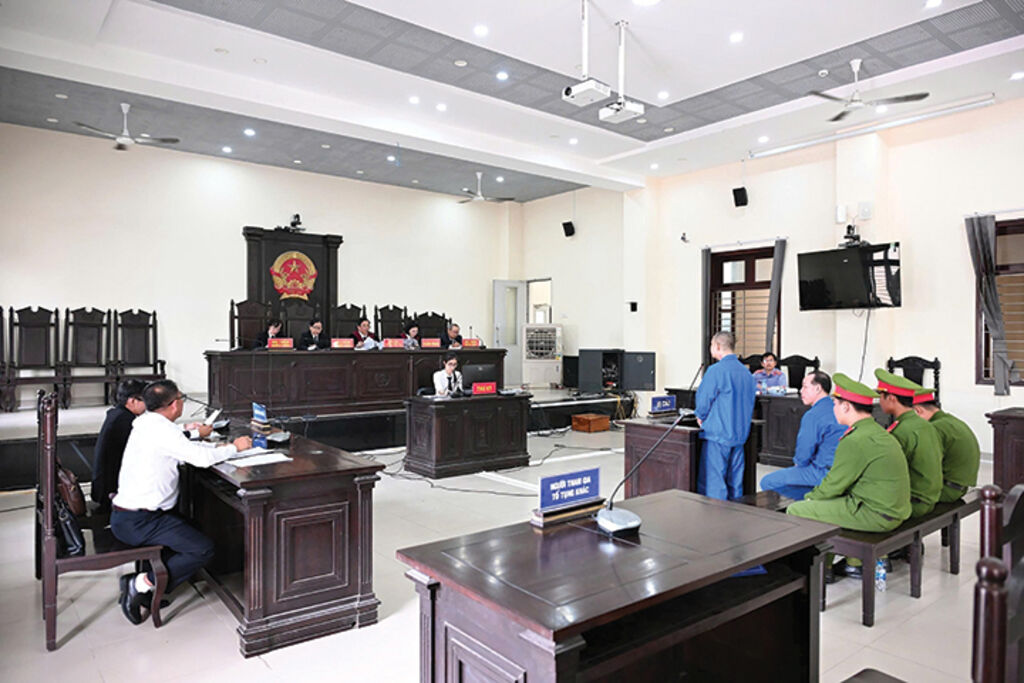 |
| On March 12, 2026, the People’s Court of Tay Ninh province sentenced two defendants to life imprisonment for illegally transporting nearly 60 kilogrammes of narcotic substances__Photo: VNA |
Introduction
Drugs pose a serious threat to public health, social order and safety. According to the United Nations Office on Drugs and Crime (UNODC) World Drug Report 2025, approximately 316 million people worldwide used drugs in 2023. Drug-related harm extends beyond users’ physical and mental health and the transmission of infectious diseases such as HIV/AIDS and hepatitis. Drug use is also associated with other forms of crime, including offences against ownership, life and health, money laundering and corruption. In recent years, the emergence of new synthetic psychoactive substances and the concealment of drugs in the form of food, beverages and e-cigarettes have continued to pose challenges for crime prevention and control, particularly among adolescents and young adults.
In view of the transnational nature of drug-related crime, the international community has established a common legal framework based on three UN conventions: the Single Convention on Narcotic Drugs of 1961, the Convention on Psychotropic Substances of 1971 and the United Nations Convention against Illicit Traffic in Narcotic Drugs and Psychotropic Substances of 1988. Vietnam acceded to all three conventions in 1997, thereby committing itself to international cooperation and to implementing obligations related to the criminalisation of certain drug-related acts.
Vietnamese criminal law concerning drug-related offences has undergone multiple revisions and refinements. The Penal Code of 1985 introduced a new article, Article 96a, which addressed the offence of illegally producing, storing, transporting, or trading in narcotic substances. In 1997, these offences were placed in a separate chapter (Chapter VIIA). This approach was maintained in the Penal Code of 1999 (Chapter XVIII) and in the Penal Code of 2015, as amended and supplemented in 2017 (Chapter XX, Articles 247 to 259). Through successive legislative revisions, the system of offences has been gradually differentiated by criminal act, while the quantitative thresholds for narcotic substances have been specified in greater detail to enhance transparency and consistency in law application.
Recent adjustments in Vietnam’s criminal policy on drugs have been shaped by two policy directions. On the one hand, Directive 36-CT/TW of August 16, 2019, issued by the Politburo of the Communist Party of Vietnam, identifies drug prevention, control and suppression as both an urgent and a long-term task. More recently, Conclusion 132-KL/TW of March 18, 2025, calls for a stricter criminal policy to reduce drug demand and disrupt the relationship between supply and demand. The third Plenum of the 14th Party Central Committee also set a target of making at least 50 per cent of commune-level areas and 20 per cent of provincial-level areas free of drugs by 2030. On the other hand, Resolution 27-NQ/TW of 2022 on further building and improving the socialist rule-of-law State of Vietnam advocates a more humane criminal policy and a narrower scope for the application of the death penalty. Reconciling these two policy directions requires striking a balance between stringent punishment and the protection of human rights.
Regarding the legal framework, the 2013 Constitution requires respect for and protection of human rights and permits restrictions on rights only in necessary cases and in accordance with the law. Article 6 of the International Covenant on Civil and Political Rights (ICCPR), to which Vietnam is a party, limits the application of the death penalty to ‘the most serious crimes’. On that basis, Law 86/2025/QH15, amending and supplementing a number of articles of the Penal Code, effective on July 1, 2025, and Law 120/2025/QH15 on Drug Prevention and Control, effective on July 1, 2026, highlight the need for consistency between criminal law and specialised legislation. In addition to the provisions already in force, the 2026 draft Penal Code (revised) continues to propose changes to the structure and content of drug-related offences, arranged in Chapter XIX, Articles 233 to 246. These articles analyse the changes adopted in 2025 and the proposals in the 2026 draft, identifying shortcomings and making recommendations for further improvements to the law.
New features in criminal law on drug-related offences
Criminal policy changes regarding drug-related offences have been implemented in two stages. The first stage is associated with Law 86/2025/QH15, which entered into force on July 1, 2025. The second stage concerns the 2026 draft revised Penal Code, which builds on and proposes additional changes to both the content and structure of offences, with six noteworthy points below.
First, the criminalisation of certain forms of illegal use of narcotic substances. Prior to July 1, 2025, this act was primarily addressed by administrative measures. Law 86/2025/QH15 added Article 256a, which is retained as Article 243 in the 2026 draft. Accordingly, a person who illegally uses narcotic substances in the cases prescribed by law, such as during drug rehabilitation or opioid substitution treatment, during post-rehabilitation management or within two years after these periods end, may be sentenced to two to three years’ imprisonment; in cases of recidivism, the term ranges from three to five years. This change reflects a shift from an approach based primarily on administrative measures to the use of criminal sanctions against certain groups of drug users. In policy terms, the provision aims to reduce demand for drugs, thereby helping meet the requirement set out in Conclusion 132-KL/TW.
Second, the further narrowing of the scope of capital punishment. Law 86/2025/QH15 removed the death penalty for the offence of illegal transportation of narcotic substances, and separated the penalty bracket providing for life imprisonment or the death penalty into a distinct applicable to cases involving a quantity of three kilogrammes or more of heroin, methamphetamine or substances in the same group. The 2026 draft proposes removing the death penalty for the offence of illegal trading in narcotic substances, so that the maximum penalties under Article 237 would be 20 years’ imprisonment or life imprisonment. If this proposal is adopted, within Chapter XIX only the offence of illegal production of narcotic substances under Article 234 will provide for the death penalty.
The drafting body gives three main reasons for this proposal. To begin with, the quantitative thresholds in the capital punishment bracket do not fully reflect the actual scale of drug-trading operations. When offenders face the same penalty despite significantly different transaction volumes, the incentive to limit the quantity of drugs traded may diminish. In some cases, offenders may even resist or use weapons to avoid arrest. Another consideration is that compared with production, trading may stem from diverse motives and circumstances, whereas production requires preparation in terms of personnel, technology and raw materials, and entails the potential risk of producing new narcotic substances. The drafting body also argues that the removal of the death penalty may facilitate international cooperation on extradition and mutual legal assistance in criminal matters, since some States refuse extradition if the person sought faces the risk of being sentenced to death or executed. However, this proposal remains subject to debate. According to the draft materials, 34 National Assembly deputies and the Supreme People’s Court recommended reconsidering the proposal out of concern over a decline in deterrence and the risk of Vietnam becoming a drug transit area.
Third, the updating of the group of narcotic substances subject to strict quantitative thresholds. As of 2025, ketamine and fentanyl have been added to the group of substances together with heroin, cocaine, methamphetamine, amphetamine, MDMA and XLR-11 in the constituent elements of five offences: illegal production, illegal storage, illegal transportation, illegal trading and illegal appropriation of narcotic substances. This group is subject to the lowest quantitative threshold, at 0.1 gram, one-tenth of the threshold applicable to the other group of narcotic substances. The adjustment aims to meet the requirement of controlling highly dangerous substances and to update criminal policy in accordance with the evolution of the drug crime situation. However, the effectiveness of this approach depends on setting quantitative thresholds appropriate to each substance’s characteristics and ensuring proportionality between the dangerousness of the act and criminal liability.
Fourth, the expansion of the criminal liability of commercial legal persons for certain drug-related offences. Under the current Penal Code, commercial legal persons are not yet subject to criminal liability for offences within the chapter on drugs. The 2026 draft adds four offences to the scope of criminal liability of commercial legal persons under Article 79, namely illegal production of narcotic substances (Article 234), illegal transportation of narcotic substances (Article 236), illegal trading in narcotic substances (Article 237), and acts related to precursors (Article 239). The envisaged sanctions include fines ranging from 200 million to 16 billion Vietnam dong and termination of operations. This proposal aims to address cases in which enterprises are exploited to import precursors, conceal drugs within goods, or legitimise illicit profits, particularly in the fields of chemicals, pharmaceuticals, transport, and import-export.
Notably, Article 78 of the draft also redefines the grounds for attributing criminal liability to legal persons. Under this approach, a legal person is not regarded as the perpetrator of an offence in the ordinary sense, but must bear criminal liability when a criminal act is committed by an individual in the name and for the benefit of the legal person and under its direction, management or approval. This approach clarifies the relationship between the individual’s act and the legal person, and provides clearer grounds for prosecuting organisations.
Fifth, the expansion of criminal liability for preparatory acts of illegal production of narcotic substances. The draft adds Article 234 to the list of offences for which preparatory acts incur criminal liability under Article 14, with a term of imprisonment of one to five years. Accordingly, certain preparatory acts, such as renting premises, purchasing machinery, or stockpiling precursors, may be subject to criminal prosecution before the production facility becomes operational provided that they meet the legal criteria for a preparatory act. This proposal reflects an orientation towards early intervention in drug production activities. The expansion of criminal liability at the preparatory stage should be considered in relation to the dangerousness of the act, the ability to prove criminal intent, and the need to differentiate criminal liability.
Sixth, the increase of penalties and the rearrangement of provisions on drug-related offences. The 2025 Law raised the minimum term of imprisonment for the offences of illegal storage and illegal production of narcotic substances to three years. The 2026 draft proposes applying a similar starting term to the offences of illegal transportation and illegal trading in narcotic substances, while raising the additional fine from approximately VND 5 million-500 million to VND 10 million-1 billion. These changes aim to enhance deterrence and limit the profit motive behind criminal activity.
Structurally, the draft arranges drug-related offences in Chapter XIX, comprising 14 articles, Articles 233 to 246. In addition, the addition of the offence of establishing or joining an organised criminal group under Article 310 is expected to create an additional legal basis for addressing organised criminal groups, including transnational drug networks. The drafting body also affirms that acts of producing, trading in, or importing drugs concealed in the form of food, beverages, and electronic cigarettes will be addressed under the provisions on drug-related offences. This underscores the need to apply consistently the rules on identifying narcotic substances, measuring quantities and establishing the constituent elements of offences with respect to products in which drugs are concealed in various forms.
Shortcomings and limitations
Alongside the above changes, a comparison of the draft Penal Code (revised) of 2026 with specialised legislation and practical requirements reveals several issues that require continued consideration to ensure consistency, coherence, and proportionality in criminal policy.
One major concern is that the highest penalty bracket for illegal trading in narcotic substances does not adequately distinguish between different levels of seriousness. Following the proposal to remove the death penalty, Article 237.4 still prescribes a penalty of 20 years’ imprisonment or life imprisonment for cases involving 100 grams or more of heroin. By contrast, Article 234 on illegal production of narcotic substances distinguishes between cases involving large and particularly large quantities. The formulation in Article 237 may result in a person trading 100 grams of drugs and the ringleader of a network trading tonnes of drugs falling within the same penalty bracket. This fails to fully reflect differences in scale, role, and the degree of dangerousness of the act. Notably, this lack of differentiation by quantity was one of the issues cited when proposing the removal of the death penalty, since offenders may no longer have an incentive to limit the scale of transactions once the quantitative threshold has been exceeded. Meanwhile, the proposal to apply life imprisonment without parole, raised by several deputies, remains under consideration.
Another shortcoming lies in the scope of criminal liability of commercial legal persons does not fully cover offences that may involve the misuse of business operations. The draft provides that commercial legal persons must bear criminal liability for the offence of illegally transporting narcotic substances but does not apply this to the offence of illegal storage, even though the warehouses and facilities of enterprises may be used to conceal drugs. Similarly, Article 246 on the offence of violating regulations on the management of narcotic substances, precursors, addictive medicines and psychotropic medicines does not fall within the scope of criminal liability of legal persons, although pharmaceutical and chemical enterprises may directly participate in the management of these substances. The offence of harbouring the illegal use of narcotic substances under Article 242 also falls outside the scope of application, although violations may occur at bars, nightclubs, and karaoke parlours operated by enterprises. These gaps require a review of the scope of criminal liability of legal persons based on the organisation’s actual role in committing and facilitating criminal acts.
The draft also lacks consistency in its categorisation of offences and provisions on preparation for committing an offence. Acts related to narcotic substances are separated into five independent offences, whereas acts of producing, storing, transporting, trading in, and appropriating precursors are still provided collectively in Article 239; acts related to means and instruments are likewise consolidated in Article 240. The Committee for Legal and Judicial Affairs of the National Assembly has pointed out this inconsistency, but the draft has not been revised accordingly. In addition, criminal liability for preparatory acts has only been proposed for the offence of illegal production of narcotic substances. Meanwhile, large-scale drug transportation and trading operations, particularly across borders, may also require extensive, organised preparation that leaves identifiable evidence. Failing to consider these acts may limit the ability to address highly dangerous criminal activities at an early stage.
A further issue concerns the provisions on the offence of illegal use of narcotic substances remain inconsistent with specialised legislation. Article 243 employs constituent elements such as ‘the period of drug rehabilitation’, ‘the period of post-rehabilitation management’ and ‘the period of management of a person illegally using narcotic substances’, while the precise meaning of these terms depends on the Law on Drug Prevention and Control. If the concepts and periods in the two instruments are not consistent, the scope of criminal prosecution may change beyond the legislature’s intention. Furthermore, the application of imprisonment to a person undergoing opioid substitution treatment may discourage some persons from entering or continuing treatment, especially where the provision is applied mechanically without consideration of the purpose and process of treatment. Article 243 provides only imprisonment, without a mechanism to apply non-custodial penalties linked to the obligation to undergo drug rehabilitation. Therefore, it is necessary to consider both the clarity of the constituent elements and the possibility of combining criminal sanctions with treatment.
Another area requiring attention is the method of measuring drug quantities and the circumstances determining penalty brackets do not adequately account for the characteristics of mixed drugs and new methods of committing offences. Determining quantity by the mass or volume of the entire mixture, rather than by active ingredient content, may lead to results that do not accurately reflect the actual amount of narcotic substance in the product. For instance, in e-cigarette liquids, ‘happy water’ or drug-containing confectionery, the active ingredient content may account for only a small proportion, yet the mass or volume of the entire product may still reach the threshold for criminal prosecution. Under the formulation set out in the draft, only 10 millilitres of solution may be sufficient to prosecute the offence of illegal storage of narcotic substances, carrying a minimum penalty of three years’ imprisonment, depending on the composition and the relevant legal elements. Meanwhile, the articles do not provide separately for an aggravating circumstance for the concealment of drugs in the form of consumer products, even though this modus operandi may increase the risk of adolescents gaining access to drugs. Similarly, Article 237 does not provide a separate aggravating circumstance for trading in drugs using computer networks, telecommunications networks or electronic means, in contexts where transactions may be conducted via social media, paid for with crypto-assets, and delivered through courier services. The recommendation to add a circumstance of committing the offence in or near a school has likewise not been adopted.
Recommendations
A key priority is to differentiate the penalty brackets for illegal trading in particularly large quantities of narcotic substances. Article 237.4 could be divided into separate penalty brackets reflecting the severity of the offence, as provided in Article 234. The first bracket could provide for 20 years’ imprisonment or life imprisonment, while the highest bracket could provide for life imprisonment in cases involving particularly large quantities of narcotic substances, such as three kilogrammes or more of heroin or other substances in the same group, or offenders acting as masterminds or ringleaders of transnational drug-trafficking networks. An early impact assessment of life imprisonment without parole should also be conducted. If introduced, the scope of this penalty and its relationship with existing penalty brackets should be clearly defined.
Another consideration is to expand the scope of criminal liability of commercial legal persons where appropriate. This could include adding the offences of illegal storage of narcotic substances (Article 235), harbouring the illegal use of narcotic substances (Article 242), and violating regulations on the management of narcotic substances, precursors, addictive medicines and psychotropic medicines (Article 246) to the list of offences for which commercial legal persons may be held criminally liable under Article 79. Such an expansion should be based on a legal person’s capacity to commit an offence through its organisational structure, assets or business operations, rather than solely on the nature of the offence. For the offence specified in Article 242, consideration could also be given to introducing penalties such as suspension of operations for a specified period or prohibition from operating in sectors subject to security and public-order requirements, where sufficient legal grounds exist.
The legal framework should also be refined to ensure greater consistency in legislative drafting and the treatment of preparatory acts. Under Article 239, consideration could be given to separating acts involving precursors into distinct offences or more clearly differentiating the penalties for production and trading from those for storage and transportation. This would help align the provisions with the structure of offences involving narcotic substances. Criminal liability for preparatory acts could also be extended to large-scale, organised or cross-border illegal transportation and trading in narcotic substances. However, any such extension should be based on specific, provable elements of an offence to avoid criminalising preparatory acts that do not clearly demonstrate criminal intent.
Furthermore, greater alignment is needed between Article 243 and the 2025 Law on Drug Prevention and Control, alongside measures to better integrate criminal sanctions with drug rehabilitation. The constituent elements of the offence under Article 243 should be reviewed to ensure consistency with the terminology, time periods and management mechanisms established under the relevant legislation. A clear distinction should also be drawn between the illegal use of narcotic substances and the circumstances of persons undergoing opioid substitution treatment, to avoid automatically imposing criminal liability on those complying with a treatment programme. Consideration could be given to allowing non-custodial reform combined with mandatory drug rehabilitation in cases meeting the conditions prescribed by law. Sentenced persons should also have access to appropriate rehabilitation and treatment services. Such measures would help balance the need for crime prevention and deterrence with the objectives of treatment and relapse prevention.
It is also necessary to continue to improve the methods used to determine the quantities of mixed drugs and new substances. For e-cigarette liquids, food, beverages and other products containing narcotic substances, the method of quantification should better reflect the active ingredient content and the characteristics of each product. This could involve setting separate quantitative thresholds for different product categories or authorising a competent authority to issue guidance on calculating drug quantities based on active ingredient content, using clear and verifiable criteria. In addition, the concealment of narcotic substances in food, beverages, e-cigarettes or other consumer products should be considered for inclusion as a circumstance attracting a higher penalty bracket under Articles 234 and 237. A mechanism should also be established to regularly update the list of narcotic substances subject to lower quantitative thresholds, ensuring flexibility while maintaining legal certainty in criminal law.
Finally, the law should be amended to introduce additional circumstances attracting higher penalty brackets for emerging methods of committing offences and offences committed in locations requiring special protection. Consideration could be given to adding two circumstances to Article 237.2: “using computer networks, telecommunications networks or electronic means to commit the offence” and “committing the offence in or near an educational institution”. These additions should reflect the greater seriousness of the offences and be supported by evidence, without automatically triggering a higher penalty bracket merely because electronic means were used. For offences committed in or near educational institutions, the geographical scope and the link between the criminal conduct and the risk posed to students should be clearly defined to ensure legal certainty and consistent application.
Overall, the changes in criminal policy regarding drug-related offences reflect two parallel orientations: strengthening sanctions against criminal acts and expanding criminal liability, while narrowing the scope of application of the death penalty. To ensure the consistency and effectiveness of this policy, it is necessary to continue differentiating penalty brackets, improve the provisions on the criminal liability of legal persons, align criminal law with specialised legislation, and adjust the provisions on quantification and the circumstances that determine penalty brackets to suit new modus operandi. These amendments need to harmonise the requirements of drug control, the principle of proportionality of punishment and the protection of human rights.-